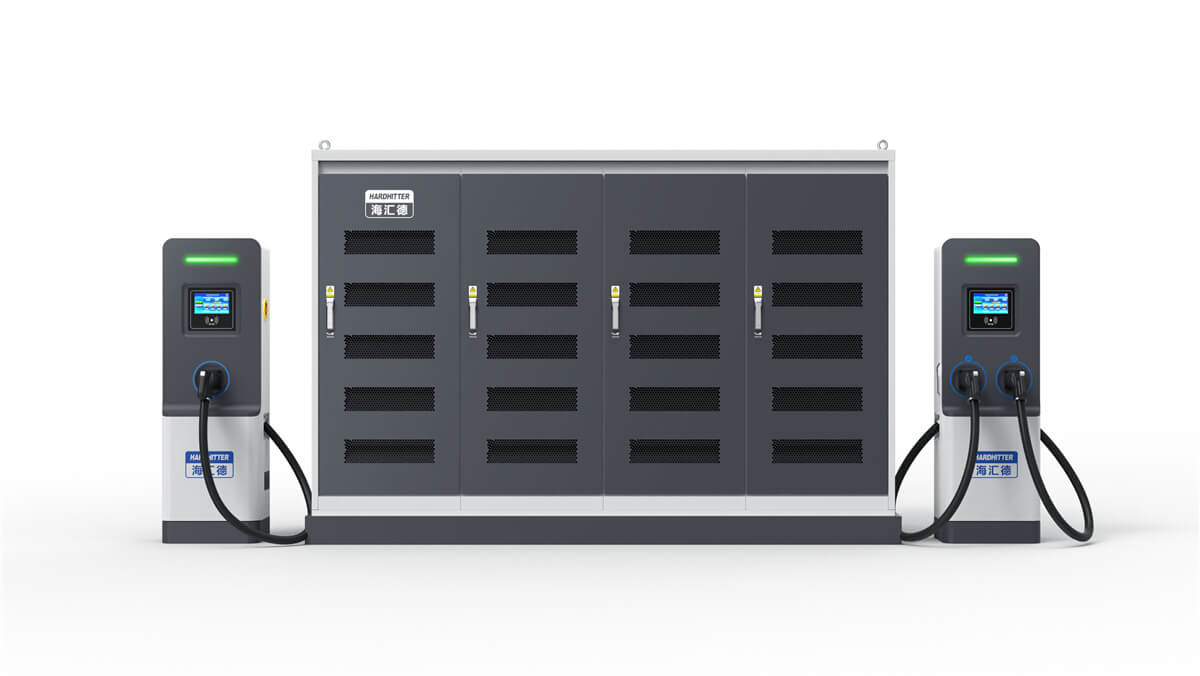
Driven by the “Dual Carbon” strategy, the electrification of commercial vehicles is accelerating. High-frequency and high-power-consuming scenarios like heavy trucks and mine trucks pose higher requirements for power density, scheduling efficiency, and environmental adaptability of charging equipment. HARDHITTER has launched the 1920kW intelligent power scheduling charging system, providing operators with a solution that balances efficiency, flexibility, and reliability.
I. Multi-dimensional Performance Empowering Efficient Replenishment
1. High-power Matrix Allocation Architecture
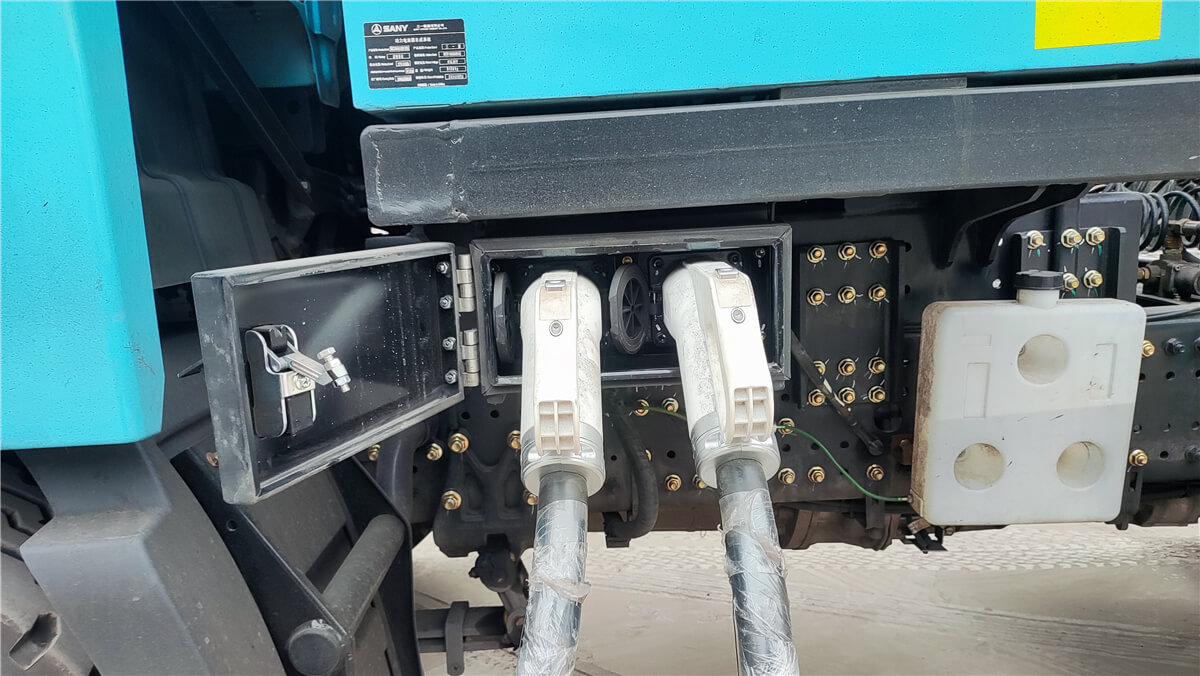
Designed based on a 1000V high-voltage platform with a rated power of 1920kW, the system supports flexible configuration of 6-18 guns. The output current is 300A per gun, and the liquid-cooled terminal gun’s maximum continuous output current is 600A, meeting fast replenishment needs for large-capacity batteries in heavy and mine trucks. Through matrix power allocation technology, it can dynamically allocate multi-gun output power in real-time, avoiding resource idleness caused by traditional single-pile power fixation. When some vehicles finish charging, idle power automatically shifts to other terminals, significantly improving equipment utilization.
2. Smart Scheduling and High Conversion
Equipped with smart power scheduling technology, the system can achieve module-level precise power allocation according to vehicle BMS needs, battery SOC, and station load, with charging efficiency up to 95.5%. Compared with traditional piles, whole-station energy loss is reduced, enhancing operational economy.
3. Forward-looking Design Supporting Smooth Upgrade
The system uses a modular architecture with 48 built-in 40kW power units, supporting total power increase through parallel expansion to meet future demand growth. The terminal is compatible with liquid-cooled supercharging gun upgrades and reserves a V2G upgrade interface, laying the foundation for PV-storage-charging integrated layout.
II. Scenario Adaptation: Tackling Heavy-Duty Truck Charging Pain Points
1. Heavy-duty Truck Transport Hubs: Smart Scheduling Breaking Queuing Dilemmas
Heavy trucks have long daily mileages and high replenishment frequencies. Traditional piles fail to allocate power flexibly, easily leading to peak-hour congestion. HARDHITTER optimizes processes through:
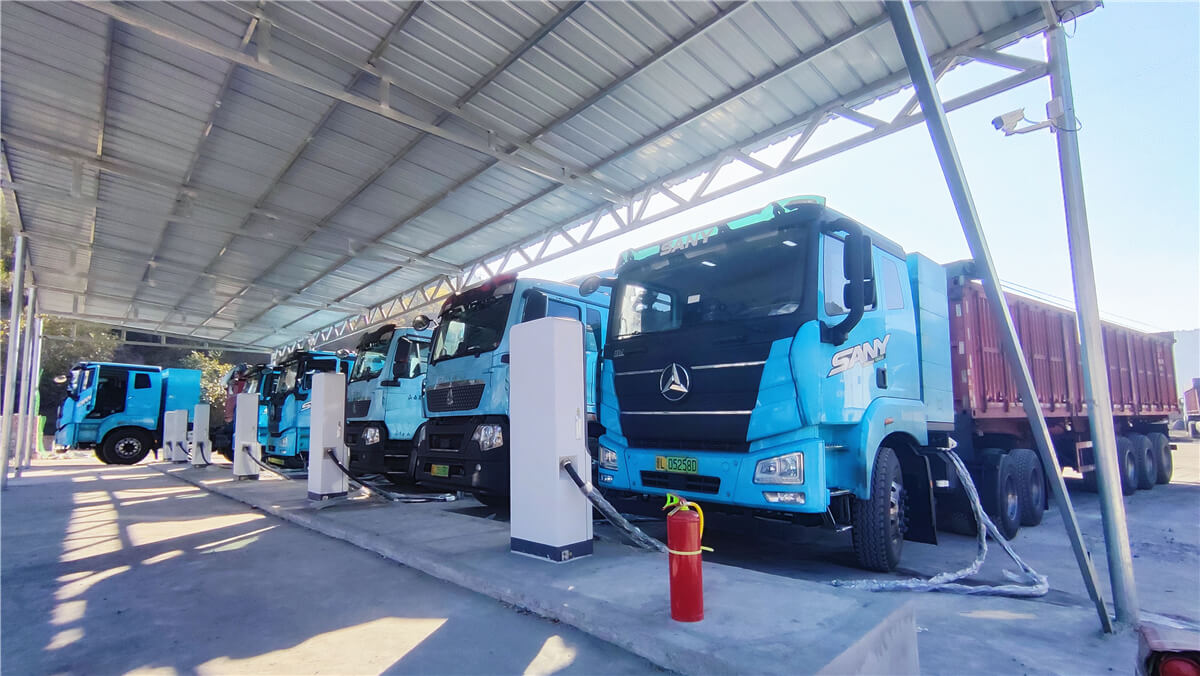
• Dynamic Power Allocation: The 1920kW power pool can simultaneously meet differentiated needs of multiple trucks. For example, when one truck needs 600kW fast charging, the system can call idle modules for concentrated supply, increasing speed by 85% compared to traditional 320kW dual-gun piles. Shortening replenishment time helps increase daily transport frequency.
2. Mining and Industrial Scenarios: High Reliability in Extreme Environments
Mine truck operation environments often involve high dust, extreme temperature differences (-40°C to +60°C), and vibration impacts. The system ensures stability through multi-layer protection:
• Environmental Adaptability: IP55 rating combined with 40PPI high-density dustproof mesh and fully potted modules effectively resists dust; the wide-temperature smart cooling system ensures continuous output in -40°C cold and 60°C heat.
• Active Safety Protection: 65 real-time monitoring functions cover risks like overvoltage, reverse current, and grounding faults. The dual protection mechanism of startup self-test and output interface reduces failure rates, adapting to 24-hour continuous operation in mines.
III. Building a Sustainable Charging Ecology Driving Industry Synergy
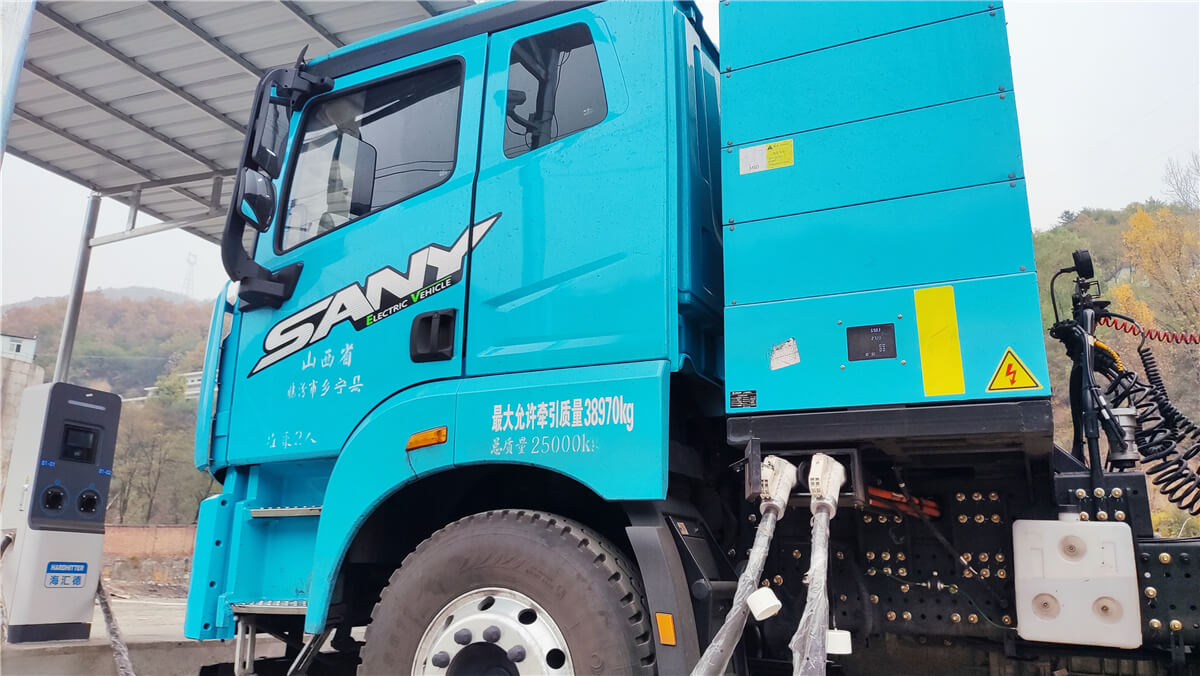
The HARDHITTER 1920kW intelligent power scheduling charging system has been applied at scale in heavy truck charging stations in Inner Mongolia, Shanxi, and many other places.
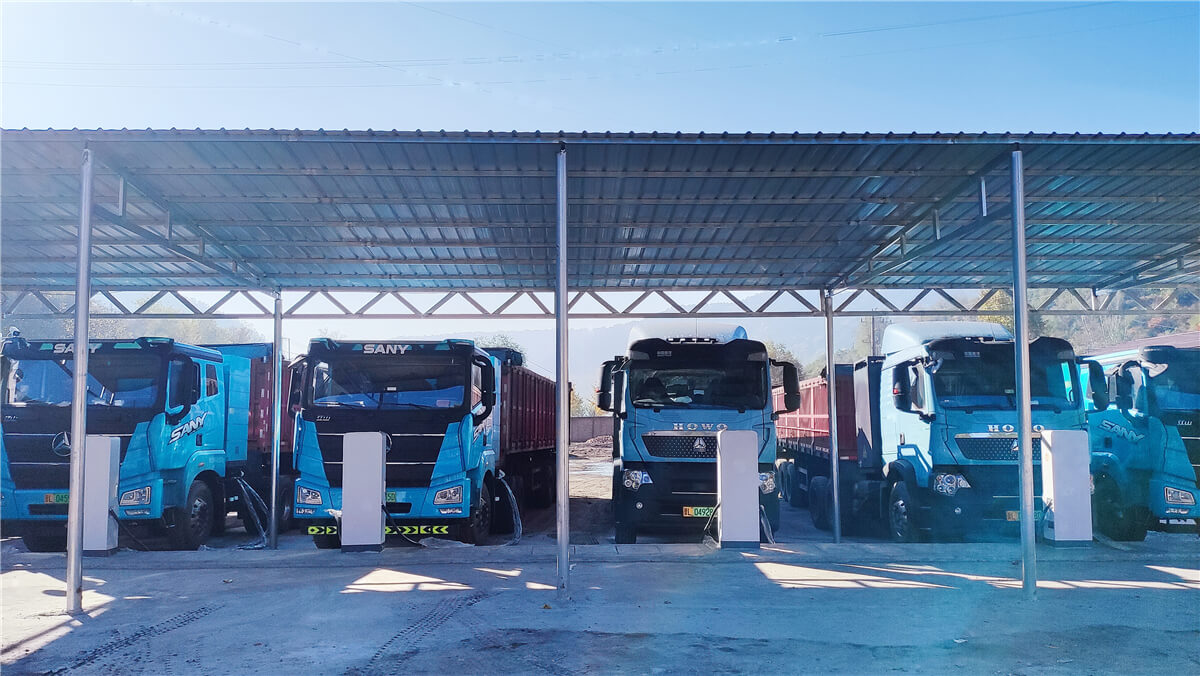
With its modular architecture, smart scheduling core, and highly reliable design, the system solves replenishment bottlenecks in special scenarios like heavy and mine trucks, providing a scalable and sustainable technical foundation for long-term station operation. HARDHITTER, with exclusive customized solutions, solves energy needs for different scenarios and drives charging infrastructure towards standardization and intelligence through multi-dimensional value output.